Who Can Legally Clean Your Building's Exterior in Singapore?
Source: Magnific/Teksomolika
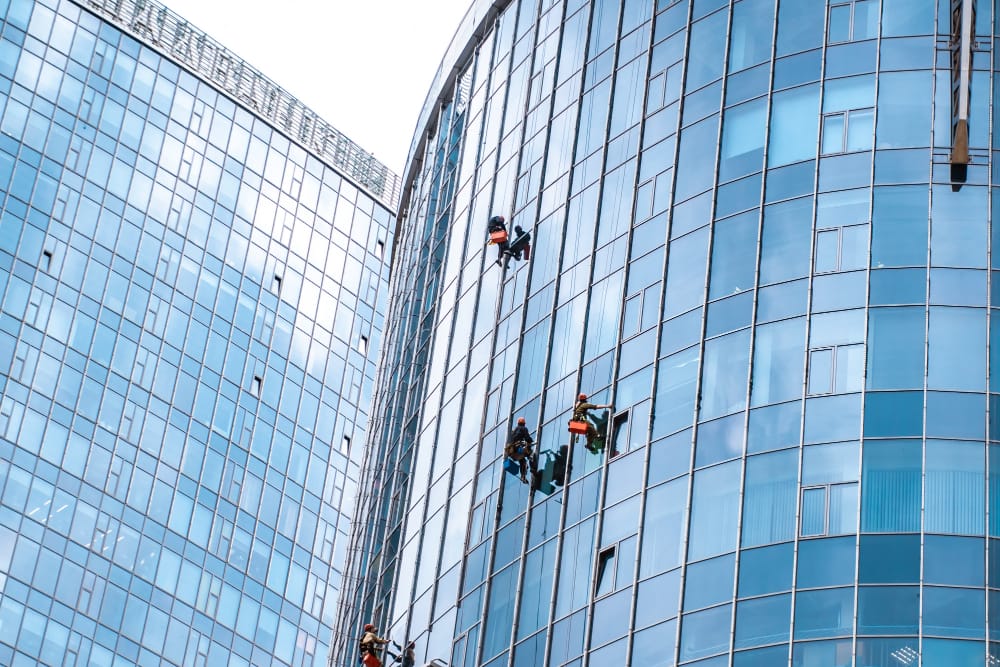
Cleaning a building’s exterior at ground level is one thing. Sending workers down the side of a high-rise building on ropes, a gondola, or an elevated platform comes with a very different set of legal and safety requirements.
There is no single Singapore licence that automatically qualifies a contractor to clean every type of building façade. In fact, façade cleaning itself is excluded from NEA’s Cleaning Business Licence regime. Where the job involves working at height, however, the contractor must comply with the Workplace Safety and Health (WSH) requirements that apply to anyone working at height, covering training, risk assessment, permits and equipment checks.
What Singapore Law Says About Cleaning a Building's Exterior
Two sets of requirements are particularly relevant.
The Ministry of Manpower (MOM) oversees workplace safety under the Workplace Safety and Health Act and its Work at Heights Regulations. The Building and Construction Authority (BCA), meanwhile, regulates building and façade safety, including periodic façade inspections for qualifying buildings.
These cover different things: MOM’s rules protect the people doing the cleaning, while BCA’s rules protect the building and the public. Façade cleaning and statutory façade inspection are also not the same service.
1. Work-at-Height Requirements for Exterior Cleaning
Once workers need to clean an exterior from an elevated position where they could fall, the WSH requirements for work at height become relevant.
Several requirements matter before anyone starts work:
- Workers need appropriate training: Workers must receive relevant work-at-height training before deployment and be competent to perform their assigned work safely. Operators of equipment such as Mobile Elevating Work Platforms (MEWPs) must also be trained and competent to operate the equipment.
- The risks must be assessed: A thorough risk assessment must be conducted before work at height begins, covering hazards such as fall distance, anchorage points, weather conditions and the condition of access equipment.
- A Fall Prevention Plan may be required: Occupiers of certain worksites, and employers with 50 or more employees, must put a site-specific Fall Prevention Plan in place before work at height starts.
- Permit-to-Work applies above 3 metres: A Permit-to-Work system is required specifically for hazardous work at height, defined as work where a person could fall more than 3 metres. Training and risk assessment duties apply more broadly, not only above this threshold.
2. Access Systems Must Be Suitable And Safely Operated
Beyond training, the access method should be chosen according to the building and the work involved. High-level façade cleaning may use industrial rope access, suspended platforms or gondolas, or Mobile Elevating Work Platforms (MEWPs).
- Industrial rope access is a defined system: The WSH (Work at Heights) Regulations define an industrial rope access system as equipment that lets a person raise or lower themselves in a harness on ropes anchored to the building.
- Anchorage must meet a safety standard: Anchorage points used for rope access or fall-arrest systems must be able to withstand at least twice the maximum load likely to be placed on them and must be selected, installed and certified by a competent person.
- Operators must be legally competent: Operators must be a ‘competent person’ under the Regulations, meaning they have sufficient experience and have passed the training courses required for that work, not simply followed industry practice. IRATA is one certification scheme used in Singapore to demonstrate this for rope access work. It has three levels: Level 1 and Level 2 technicians work under Level 3 supervision, and only Level 3 can take full responsibility for rope access safety on a project.
- Equipment must be properly inspected: Fall-prevention and fall-arrest equipment must be properly maintained and inspected according to applicable requirements. MEWP safety devices must be in good working order before use and are subject to statutory inspection by an Authorised Examiner.
3. Permits, Licenses, and Who Is Responsible
This is where façade cleaning can become confusing, because several different schemes may appear on a contractor’s website.
- NEA’s Cleaning Business Licence: Façade cleaning is not covered by NEA’s Cleaning Business Licence and is specifically listed as “excluded cleaning work”, but that doesn’t remove legal responsibility once a contractor is engaged.
- BCA’s Contractors Registration System (CRS) applies in specific cases: Registration under BCA’s Contractors Registration System is required to tender for public sector projects or to hire foreign construction workers on work permits.
Building owners still have responsibilities even where a specific cleaning licence does not apply. Under Section 14A of the Workplace Safety and Health Act, a principal, including a building owner engaging a contractor, must ensure the contractor has the necessary expertise for the work.
For multi-unit buildings not managed by an MCST, owners must also jointly appoint a Competent Person to inspect the building’s façade.
Domestic Helpers Rules for Exterior Windows Cleaning
MOM sets two strict conditions on domestic helpers cleaning exterior windows, and the penalties for ignoring them are severe.
- Conditions for MDW window cleaning above ground level: A migrant domestic worker (MDW) may only clean the exterior of a window above ground level if the window has a grille that stays locked throughout the cleaning. And if an adult, such as the employer or another responsible person, directly supervises the worker during cleaning.
- Penalties for non-compliance: Employers who fail to follow these safety rules when cleaning the exterior of window panes can be fined up to $10,000, imprisoned for up to 12 months, or both. They may also be barred from hiring an MDW.
What Can Go Wrong if the Contractor is not Properly Qualified?
Hiring untrained workers for façade cleaning may lead to legal, financial, and reputational consequences.
- Fall and site safety risks: The most immediate concern is the risk of a fall or another site accident. High-rise exterior cleaning puts workers close to open edges and suspended outside buildings, so mistakes involving anchors, access equipment, supervision or work procedures can have serious consequences.
- Legal liability for building owners: Under the Building Maintenance & Strata Management Act (BMSMA), persons responsible for a building’s exterior features must ensure they are properly maintained and securely fixed. Failure to do so can result in a fine of up to $10,000, imprisonment for up to 12 months, or both.
- Insurance gaps: Workers hired informally usually aren’t covered by public liability insurance, leaving the building owner personally exposed if an accident or damage occurs.
- Property damage and project delays: Poor contractor selection can create practical problems too. An unsuitable access method can delay the job, while inappropriate cleaning techniques can damage coatings, painted surfaces, glass or cladding and lead to additional cleaning or repair work.
How Professional Façade Cleaning Keeps You on the Right Side of BCA
Professional façade cleaning helps building owners maintain exterior surfaces, address maintenance issues and meet relevant building safety requirements.
What Singapore's Climate Does to a Neglected Façade
Singapore’s weather gradually degrades building exteriors, allowing grime, moisture and biological growth to build up when façades are neglected.
- Grime Builds Up Fast: Singapore’s mean annual humidity is around 82%, with rain falling on close to half the days of the year. In a tropical climate like this, airborne pollutants settle onto surfaces and trap moisture against the building.
- Moisture Leads to Biological Growth: Persistent damp lets algae, moss, and fungi take hold, working into small cracks in concrete, stone, and grout, and weakening sealants over time.
- Water Damage Can Develop: Once sealants and coatings deteriorate, water can penetrate behind cladding and corrode steel reinforcement. This type of deterioration can also contribute to façade safety risks, with BCA recording more than 20 fallen façade incidents each year.
What the BCA's Periodic Façade Inspection Means for Your Building
BCA’s Periodic Façade Inspection (PFI) regime, in effect since 1 January 2022, requires qualifying building owners to arrange inspections at prescribed intervals. Having your façade professionally cleaned does not fulfil this requirement: cleaning and statutory inspection are separate. PFI must be carried out by an appointed Competent Person regardless of how often the façade is cleaned.
- Inspection applies by age and height: BCA’s PFI applies to buildings over 13 metres tall once they pass 20 years of age. Detached, semi-detached, terraced and linked houses used for residential purposes are excluded.
- Seven-year inspection cycle: Inspections are required every seven years once a building falls within scope.
- Appointing a competent person: Owners must appoint a Professional Engineer or Registered Architect with façade inspection certification within two months of receiving a PFI notice, or face a fine of up to $20,000 for the late appointment.
How Certified Façade Cleaning Teams Protect Workers and the Public
Source: Magnific
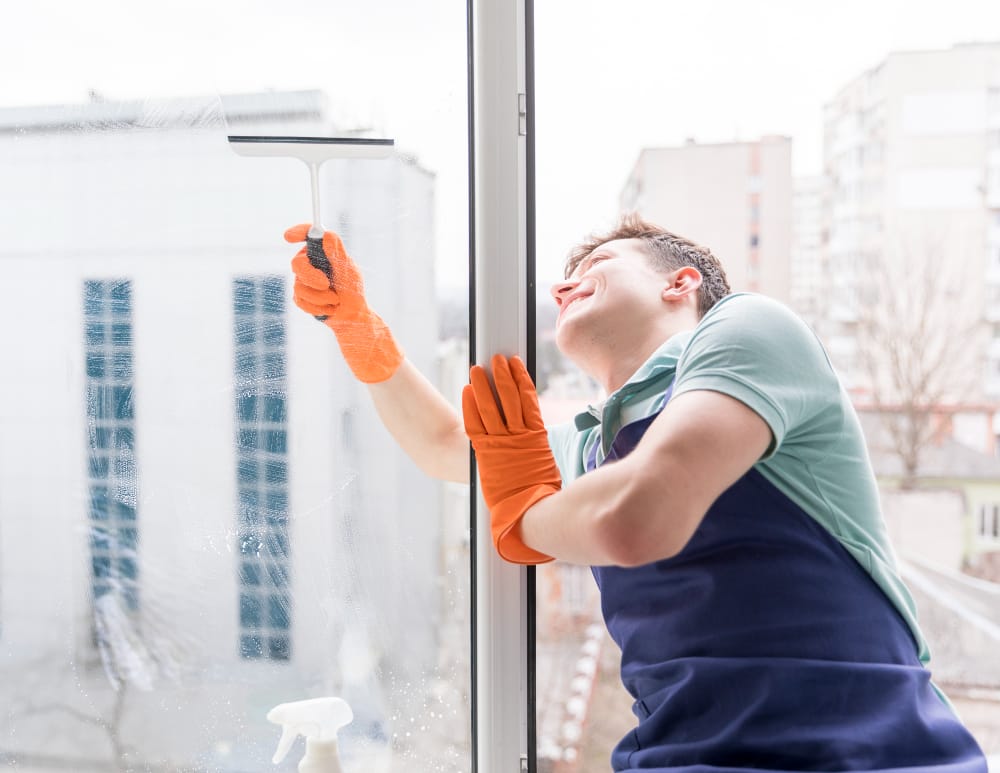
Certified cleaning teams such as AO ServicePro follow a defined safety process on every job, helping building owners identify potential façade issues early.
We provide professional cleaning services in Singapore, using rope access, gondola systems, and mobile elevating work platforms. The method is selected based on the building’s height, façade design, and surface material. From glass and metal cladding to stone and painted finishes, our teams use cleaning techniques suited to each surface.
As one of the top cleaning companies in Singapore, we are bizSAFE Enterprise Level STAR-certified and Clean Mark-accredited. We also support Singapore’s Progressive Wage Model (PWM), helping ensure fair wages and regulatory compliance. With teams positioned across the island, we can respond promptly to cleaning requirements.